Conversation history
Every turn, in order, with the transcript on both sides. The first week of real transcripts tends to change more about a product than any amount of planning did.
What your users actually asked, what the agent did about it, and what they saw back.
Once an agent is live, the useful question is not how many conversations happened. It is which requests it could not finish, and why. That answer lives in the join between the transcript and the tool calls: the user asked for something, the agent reached for a tool, and either the tool was missing, the arguments were wrong, or the answer came back in a shape nobody could read.
Every turn, in order, with the transcript on both sides. The first week of real transcripts tends to change more about a product than any amount of planning did.
Which tools the agent chose, with what arguments, and what came back. This is where a wrong answer usually turns out to have been a schema problem.
The widgets each answer produced, so you can see whether the user got a stat card or a wall of prose.
Conversation and tool events can be forwarded into your own backend, so this data can sit alongside the rest of your product analytics rather than only in our dashboard.
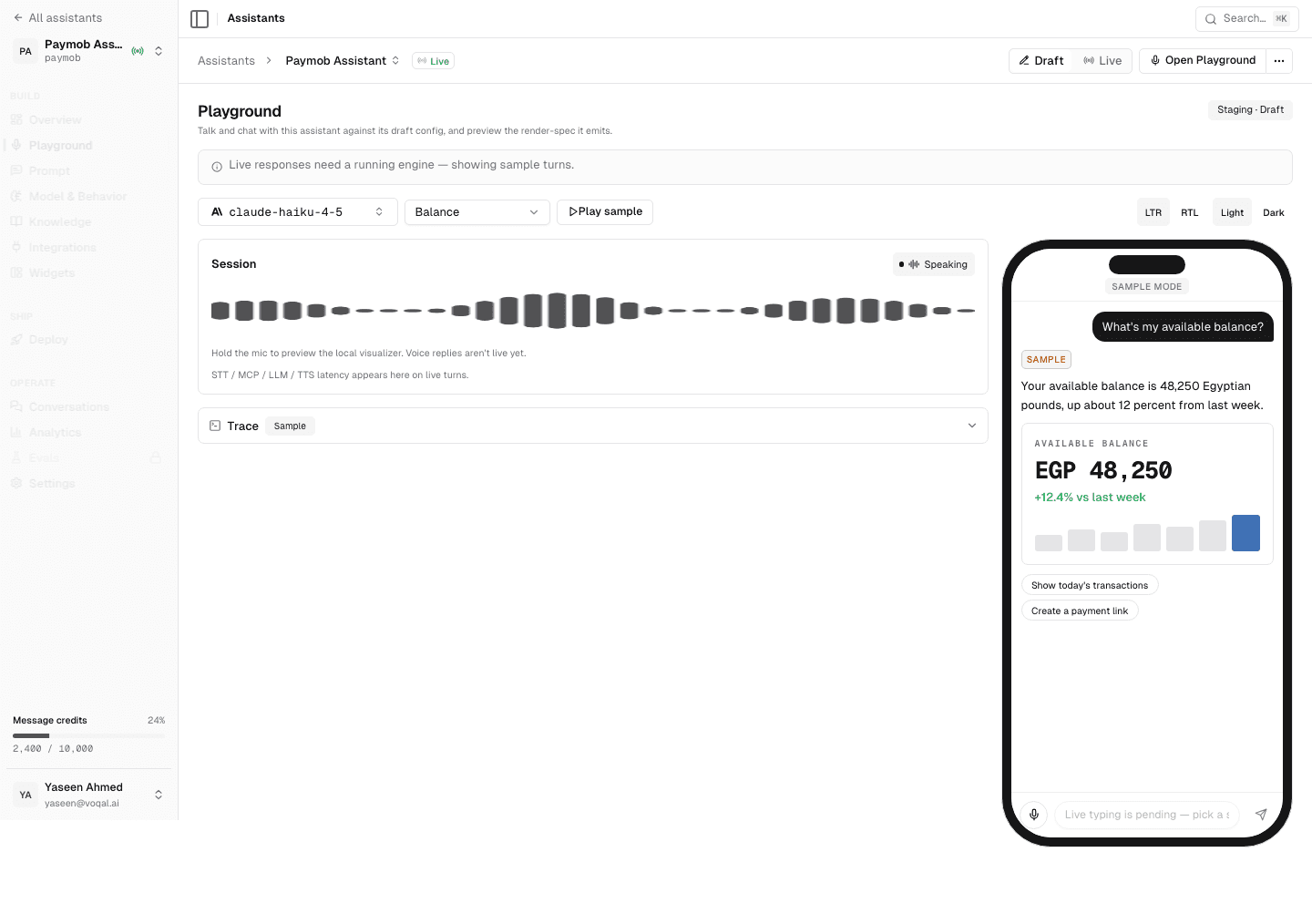
The playground runs a full turn against your real tools before anything is published, and shows the same detail: the transcript, the tool calls, the spoken response and the rendered output. Pricing lists what each plan includes, and the first week of real traffic covers what to look for once people start using it.